
Psychology and Physiology of Fear – LCGL SWAT Initiative
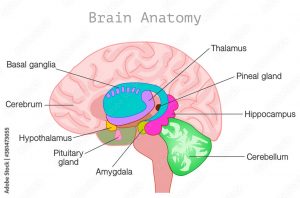
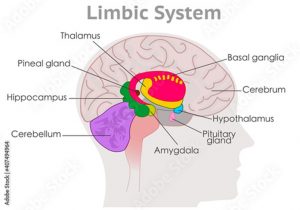
The limbic system
The limbic system is a central player in the brain’s fear circuitry and is critically relevant to understanding both the psychology and physiology of fear. Comprising structures such as the amygdala, hippocampus, thalamus, and hypothalamus, the limbic system governs emotional responses, memory formation, and the body’s reaction to perceived threats.
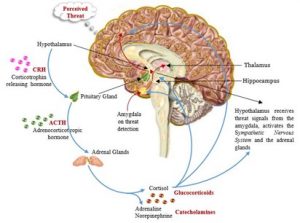
The thalamus filters sensory input for emotional relevance; the amygdala assesses danger and initiates the fear response; the hippocampus adds context by recalling similar past experiences; and the hypothalamus activates the autonomic nervous system to produce physical fear responses.
In the context of evangelism-related fear, the limbic system plays a pivotal role in how past rejection, perceived threats, or emotional memories can unconsciously trigger avoidance behaviors. Understanding the limbic system helps Believers recognize that fear is not merely spiritual or emotional—it is also biological, and through spiritual renewal (Romans 12:2), cognitive training, and Holy Spirit empowerment, its influence can be overcome.
I. The Physiology of Fear
A. Brain’s Fear Circuit
Fear responses are orchestrated by a network of brain regions:
– Thalamus: Processes sensory input and relays it to the amygdala.
– Amygdala: Evaluates threats and initiates fear responses.
– Hypothalamus: Activates the autonomic nervous system.
– Hippocampus: Provides context to fear memories.
– Prefrontal Cortex: Modulates responses and decision-making.
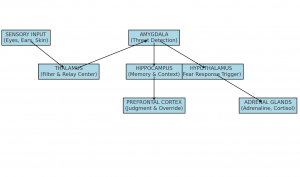
Diagram: Brain’s Fear Circuit
Brain Fear Circuit Diagram
This diagram illustrates the biological fear response pathway through the brain, highlighting key regions involved in sensory processing, emotional evaluation, and hormonal activation.
Here’s a more detailed look at how the fear processing pathway unfolds:
Sensory Input (e.g., visual, auditory, tactile) is received by the sensory organs.
This information is sent to the thalamus, which acts as the brain’s central relay station.
The thalamus filters and routes the sensory data to the appropriate brain regions for interpretation.If the incoming data suggests a potential threat, the thalamus quickly sends it via two pathways:
Fast Pathway (Low Road): Thalamus → Amygdala (for rapid, reflexive fear response)
Slow Pathway (High Road): Thalamus → Sensory Cortex → Amygdala (for more processed, rational evaluation)
II. Physical Effects of Fear
- – Increased Heart Rate
- – Rapid Breathing
- – Dilated Pupils
- – Muscle Tension
- – Sweating
- – Dry Mouth
- – Digestive Slowdown
- – Shaking or Trembling
- – Headache or Dizziness
–
III. The Psychology of Fear
A. Cognitive Distortions in Evangelism Fear
Believers may experience distorted thinking patterns that hinder evangelism:
Catastrophizing: Expecting the worst outcome.THE REIGN OF THE BRAIN+7Wikipedia+7The Physiological Society+7
Correction: Trust in God’s sovereignty (Romans 8:28).
Personalization: Believing rejection is personal.
Correction: Remember, rejection is often of the message, not the messenger (Luke 10:16).
Overgeneralization: Assuming one negative experience defines all future ones.
Correction: Each encounter is unique; trust God’s guidance (Proverbs 3:5-6).
All-or-Nothing Thinking: Viewing situations in black-and-white terms.
Correction: Recognize progress and growth (Philippians 1:6).
Mind Reading: Assuming others’ thoughts or reactions.
Correction: Focus on obedience, not assumptions (1 Corinthians 4:5).
IV. Ungodly Fear Paralyzes Purpose
Fear can hinder believers from fulfilling the Great Commission (Matthew 28:19-20):
- Fear of Rejection: Concern about others’ opinions.
ANTEDOTE: Scripture: John 15:18-20. - Feelings of Inadequacy: Belief of being unqualified.
ANTEDOTE: Scripture: 2 Corinthians 3:5-6. - Fear of Offending: Avoiding potential discomfort.
ANTEDOTE: Scripture: Galatians 1:10. - Avoidance of Conflict: Desire to maintain peace.
ANTEDOTE: Scripture: Matthew 10:28. - Doubt in the Gospel’s Power: Questioning effectiveness.Shutterstock+18Wikipedia+18Wikipedia+18
ANTEDOTE: Scripture: Isaiah 55:11. - Lack of Biblical Knowledge: Feeling unprepared.
ANTEDOTE: Scripture: 2 Timothy 2:15; 1 Peter 3:15; Acts 17:11.
V. Corrective and Counter Measures
A. Cognitive-Behavioral Strategies
- Renewing the Mind (Romans 12:2)
- Taking Thoughts Captive (2 Corinthians 10:5)
B. Holy Spirit Dependence
- Prayer for Boldness (Acts 4:29)
- Trust in the Spirit’s Guidance (Luke 12:12)
C. Practical Tools
- Scripture Memorization (Joshua 1:9; Psalm 56:3-4)
- Role-Playing Scenarios (Proverbs 27:17
- Accountability Partners (Ecclesiastes 4:9-10)
- Personal Testimony Preparation (1 Peter 3:15)
🎥 Recommended Videos on the Psychology and Physiology of Fear
- The Psychology of Fear
An exploration of the psychological mechanisms behind fear responses.
Watch on YouTube - The Physiology of Fear
A detailed look at the body’s physiological reactions to fear.
Watch on YouTube - The Psychology of Fear and Anxiety – Part I
An academic lecture discussing the psychological aspects of fear and anxiety.
Watch on YouTube - Your Body on Fear
An animated explanation of what happens in the body during fear responses.
Watch on YouTube - Fear Learning 101: The Neuroscience of Fear
A presentation by Dr. Kerry J. Ressler on the neuroscience behind fear learning.
Watch on YouTube - The Psychology of Overcoming Your Fears | Laura Soares
A TEDx talk offering strategies for overcoming fear.
Watch on YouTube - The Psychology of Fear With Richard Dawkins – Halloween Special
Richard Dawkins discusses the evolutionary basis of fear.
Watch on YouTube - The Science Behind Fear | Kabir Keswani | TEDxYouth@GMIS
A TEDx talk exploring the science of fear.
Watch on YouTube
.